For nearly two centuries, first the East India Company and then the British Crown ruled the Indian subcontinent. A freedom movement built over generations โ from the 1857 uprising to the mass, largely non-violent campaigns led by Mahatma Gandhi and a wide coalition of leaders โ finally forced the transfer of power at midnight on 15 August 1947.
At that exact moment, British India ceased to exist and two new nations, India and Pakistan, were born through Partition. Jawaharlal Nehru, independent India's first Prime Minister, marked the occasion with his midnight address to the Constituent Assembly, "A Tryst with Destiny," before the national flag was raised over a free nation for the first time.
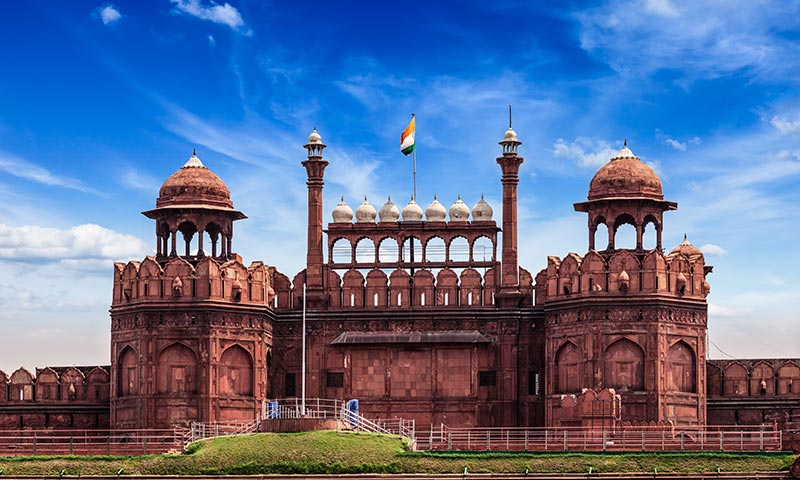
Every year since, 15 August has been observed as a national holiday: the Prime Minister hoists the tricolour at Delhi's Red Fort, addresses the nation, and citizens across the country โ and around the world โ celebrate with flags, parades, and patriotic pride.
Independence didn't happen overnight โ it was the culmination of nearly a century of resistance, reform, and mass mobilisation.
The First War of Independence โ a widespread uprising against East India Company rule โ plants the seeds of the modern freedom movement.
The Indian National Congress is founded, giving the movement its first national political platform.
The Jallianwala Bagh tragedy in Amritsar hardens public resolve and draws Mahatma Gandhi fully into the leadership of the struggle.
Congress adopts the goal of Purna Swaraj (complete independence); Gandhi's 240-mile Salt March to Dandi defies British salt taxes.
The Quit India Movement demands an immediate end to British rule, met with mass arrests and nationwide protest.
At the stroke of midnight, British rule ends. Nehru delivers "A Tryst with Destiny" and India's flag is hoisted over a free nation for the first time.
The Constitution of India comes into force โ this is Republic Day, distinct from Independence Day.
History, symbolism, and a little astrology โ the details behind India's most patriotic day.
Independence was declared at the stroke of midnight between 14 and 15 August 1947 โ a precise, symbolic moment rather than sunrise or noon.
Nehru's midnight address is ranked among the 20th century's great speeches: "At the stroke of the midnight hour, India will awake to life and freedom."
Astrologers reportedly found 15 August inauspicious by the calendar. Midnight was the compromise โ it honoured both British deadlines and Hindu timekeeping, where a new day begins at sunrise.
Lord Mountbatten is said to have picked 15 August partly to transfer power quickly and avoid unrest, and partly because it was the second anniversary of Japan's WWII surrender.
The tricolour was designed by Pingali Venkayya, adopted by the Constituent Assembly on 22 July 1947, and became free India's official flag on 15 August 1947.
Saffron for courage and sacrifice, white for truth and peace, green for prosperity and the land โ with a navy Ashoka Chakra at the centre.
The Chakra's 24 spokes represent dharma in motion. As Dr. S. Radhakrishnan put it: "There is death in stagnation. There is life in movement."
Nehru first hoisted the flag at the Red Fort on 16 August 1947, the day after independence. Every Prime Minister since has continued the ritual there each 15 August.
The same midnight split British India into two nations, India and Pakistan โ one of the largest and most turbulent mass migrations in history.
15 August marks freedom from British rule (1947); 26 January celebrates the Constitution coming into force (1950).
Launched in 2022 for the 75th anniversary, this campaign invites every household to fly the national flag โ a tradition that continues each year.
Since 1947 counts as India's first Independence Day, 15 August 2026 marks the country's 80th anniversary of independence.
The tricolour we know today was finalised only weeks before freedom itself โ here's the story of that flag.
The flag that flew on Nehru's car on the night of independence was hand-made by Surayya Tyabji โ one of the very first tricolours of free India, sewn rather than mass-produced.
On 14 July 1947, a flag committee chaired by Rajendra Prasad recommended replacing the Congress "Swaraj" flag's spinning wheel with the Ashoka Chakra. The Constituent Assembly adopted this new design on 22 July 1947 โ just three weeks before independence.
Nehru argued the change was practical: the spinning wheel looked different from each side, while the Chakra reads the same both ways. Gandhi resisted at first, but ultimately accepted the new design.
The first official flag hoisting of independent India didn't happen in Delhi โ it took place at Fort St George, Chennai, at 5:30 am on 15 August 1947.
Nehru first unfurled the tricolour at the midnight Constituent Assembly session, then again that same morning at Princess Park near India Gate. His now-famous Red Fort hoisting actually followed a day later, on 16 August 1947.
From Delhi's ramparts to rooftops across the country, the day blends solemn ceremony with unmistakable festivity.
The PM hoists the flag at Red Fort, followed by a 21-gun salute and the national anthem.
Marching contingents, school events, and cultural shows celebrate India's diversity nationwide.
Skies over Delhi and much of northern & western India fill with kites, symbolising freedom itself.
Homes, shops, and vehicles are decorated with the tricolour as citizens fly flags from their own rooftops.
Saffron, white and green sweets and snacks appear in markets and homes across the country.
Patriotic songs, films, and TV specials air throughout the day, keeping the spirit of the freedom struggle alive.